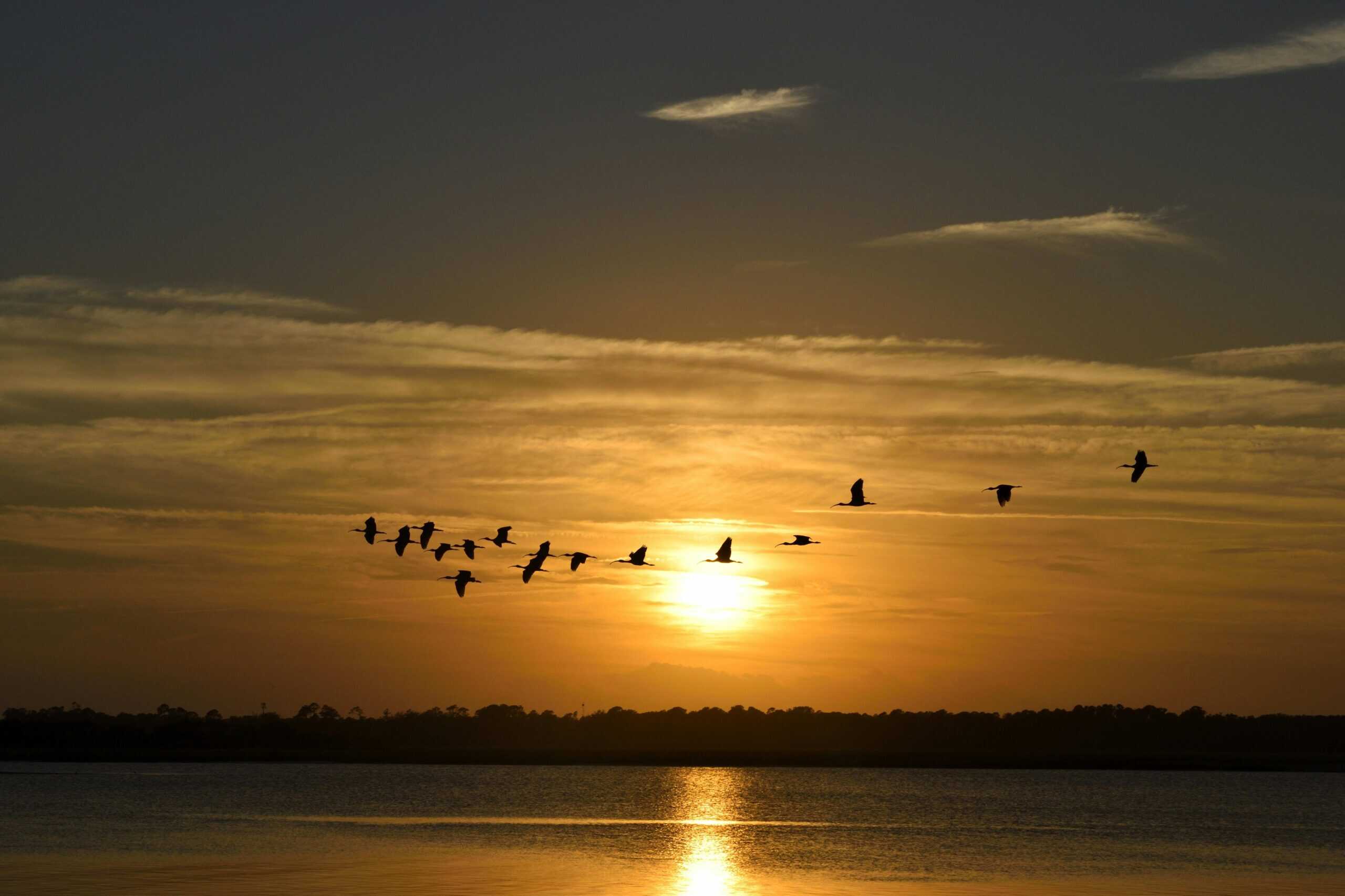
Category: Wildlife

  • The 5 Best Birds to Tick Off Your List in Victoria Falls

    The 5 Best Birds to Tick Off Your List in Victoria Falls

    Few places in the world combine the raw power of nature with such refined tranquillity as Victoria Falls. On the one hand, you have all the thrill and beauty generated by the mighty waterfall, and on the other, the comfort of town, complete with all its restaurants and shops.

    At Ilala Lodge Hotel, the boundary between wilderness and comfort feels as natural as breathing. The hotel’s manicured gardens ease into the fringe of Victoria Falls National Park, where the spray from the Falls – the legendary Mosi-oa-Tunya or “ Smoke That Thunders” – mists the air and nourishes a ribbon of lush rainforest that remains green all year long.

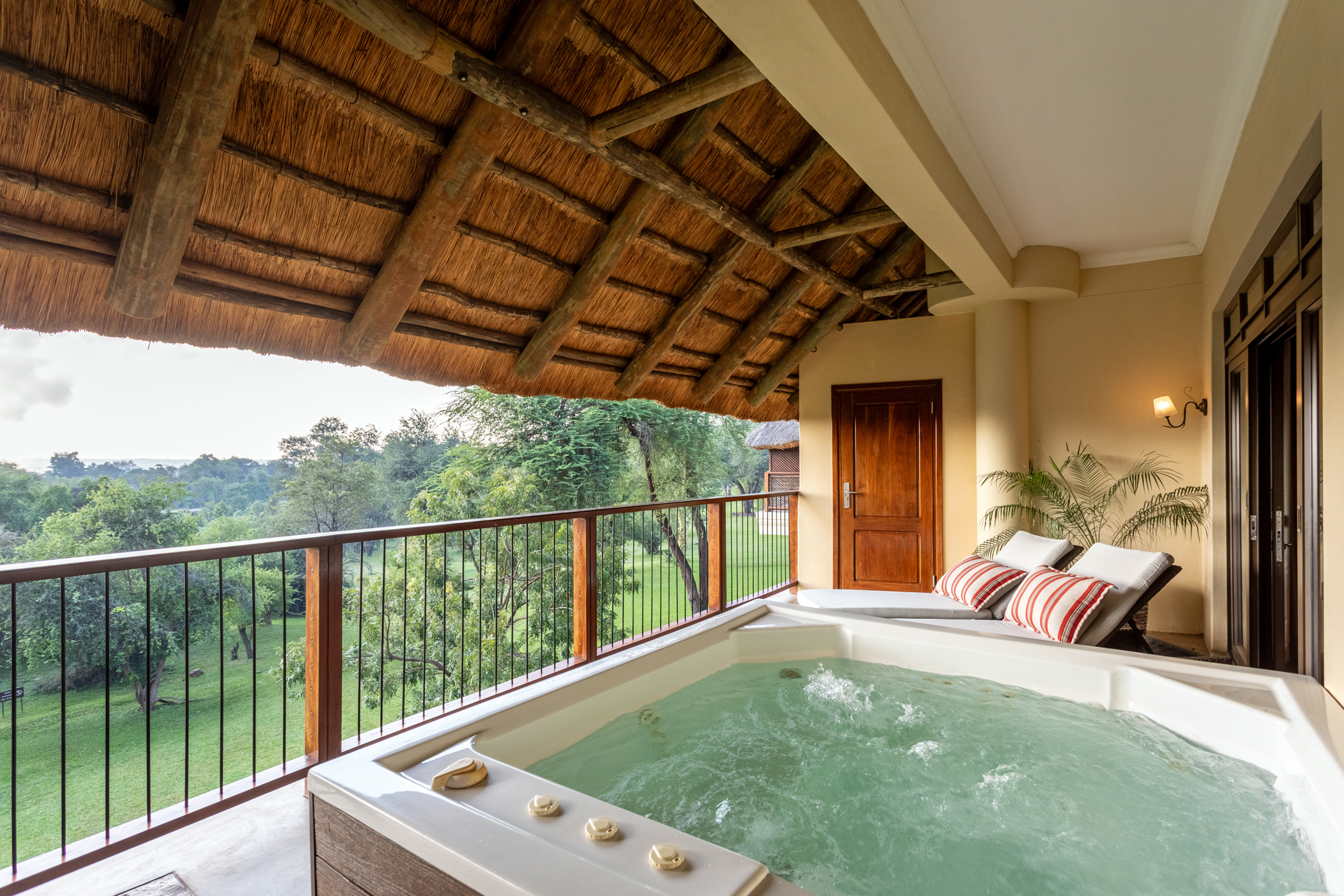
    For birdwatchers, this setting is nothing short of paradise. From the comfort of your balcony overlooking the grounds or over breakfast on the terrace, you might glimpse iridescent flashes in the treetops or hear the call of an African Fish Eagle. Whether you’re a seasoned birder or a curious first-timer, Victoria Falls offers a spectacular introduction to the birds of southern Africa.

    Here are 5 of the most exciting species to look out for during your stay.
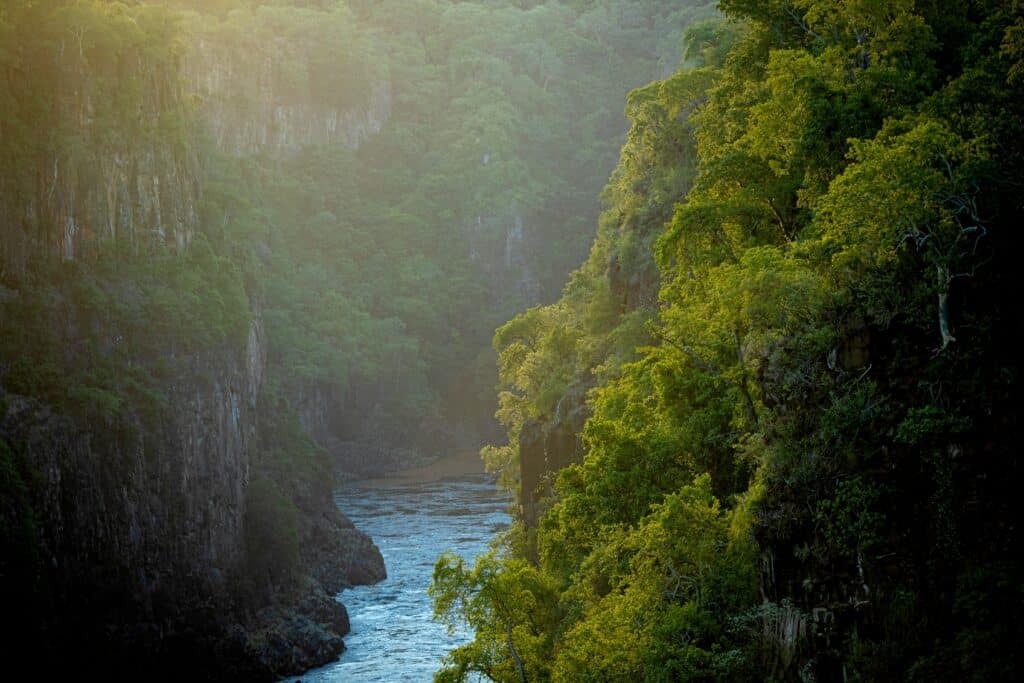
    1. African Paradise Flycatcher

    It’s hard not to stop and stare when an African Paradise Flycatcher flits through the foliage. With its rust-red plumage, blue eye-ring and long, ribbon-like tail (on the males during breeding season), this small bird brings a touch of theatre to Ilala’s grounds. They move with agile, precise bursts, snatching insects mid-air and darting between branches.

    You’re most likely to see them in the gardens or in the adjacent rainforest, where they prefer dappled light among the tree branches. They’re a reminder of how close the wild truly is, even within the serene grounds of the hotel.

    2. Trumpeter Hornbill

    No other bird quite embodies the drama of Victoria Falls like the Trumpeter Hornbill. Its loud, laughing call reverberates through the rainforest canopy and over the lawns of Ilala Lodge Hotel, especially in the mornings. These striking black-and-white birds (Quite prehistoric-looking, wouldn’t you agree?), with their curved bills and prominent casque, often move around in small family groups, feeding on fruit trees near the edge of the park.

    They are excellent indicators of the environment’s overall health as hornbills rely on old trees with natural cavities for nesting, many of which thrive in this area thanks to the moisture and protection of the Falls’ microclimate. Catching a glimpse of these impressive birds is like experiencing a herald of the rainforest itself!

    3. African Fish Eagle

    The African Fish Eagle is perhaps the most unmistakable of all birds in Zimbabwe, and its haunting call is often described as the “voice of Africa.” With chestnut plumage, a snow-white head, and a commanding presence, this raptor reigns over the Zambezi River.

    Guests of Ilala Lodge Hotel often hear their cries from the poolside or spot them perched on riverside trees while out on a sunset cruise. (Browse our sister property’s Ra-Ikane River Cruises here.) Watching one plunge from the sky to snatch a fish from the water’s surface is an unforgettable sight.

    4. Schalow’s Turaco

    Of all the feathered residents near the Falls, few inspire such admiration as the Schalow’s Turaco. Endemic to a limited range in south-central Africa, it’s one of the most special sightings for birders visiting the region. Its emerald body, crimson flight feathers, and tall green crest make it a thrill to spot among the treetops.

    You might hear it before you see it: A distinctive “kow-kow-kow” call echoing through the canopy of the rainforest just beyond Ilala’s garden fence.

    5. White-browed Robin-Chat

    Even if you don’t consider yourself a birder, the White-browed Robin-Chat will likely win you over with its voice. Its melodic, almost conversational song greets guests each morning at Ilala Lodge Hotel.

    Recognisable by its bright orange underparts and white eyebrow, this bird thrives in gardens and riverine thickets. Many guests see them hopping confidently across the pathways, tail flicking as they search for insects. They’re among the friendliest birds in Zimbabwe, often so close you can watch them over your breakfast coffee.

    Birdwatching in Victoria Falls

    What makes birdwatching here so rewarding is the sheer diversity compressed into such a small area. The rainforest, fed by the Falls, attracts tropical species; the Zambezi River sustains waders and raptors; and Ilala Lodge Hotel’s own gardens provide a sanctuary for smaller songbirds and seasonal visitors.

    Between September and March, migratory birds arrive in full force, transforming the skies with colour and song. Bee-eaters, cuckoos, and kingfishers add their brilliance to the mix, making spring and summer the most dynamic time to visit our feathered friends. Yet even in quieter months, the interplay of water, forest and open air ensures there is always something to see.

    For guests who wish to explore further, day trips to nearby game reserves like Chobe National Park or Hwange National Park offer excellent opportunities to expand your list.
    Stay With Us

    At Ilala Lodge Hotel, each day begins with birdsong drifting through the gardens and ends with the distant rumble of the Falls. Whether you’re here for a weekend or a once-in-a-lifetime journey, the birds of Victoria Falls are waiting for you!

    Browse our accommodation options online before getting in touch with our friendly reservations team at onlinereservations@ilalalodge.com to secure your booking.

    Alternatively, our online booking platform enables you to secure our own dates in one seamless, user-friendly location.

    Don’t forget your binoculars!


  • Exploring the Rich Fauna & Flora of Victoria Falls

    Exploring the Rich Fauna & Flora of Victoria Falls

    Victoria Falls, one of the world’s seven natural wonders, is more than its awe-inspiring cascades. Nestled in the heart of Zimbabwe, this UNESCO World Heritage Site boasts a diverse array of fauna and flora – delighting visitors who come for the falls, but end up enjoying far more than they originally bargained for!

    Green Canopies & Colorful Blooms

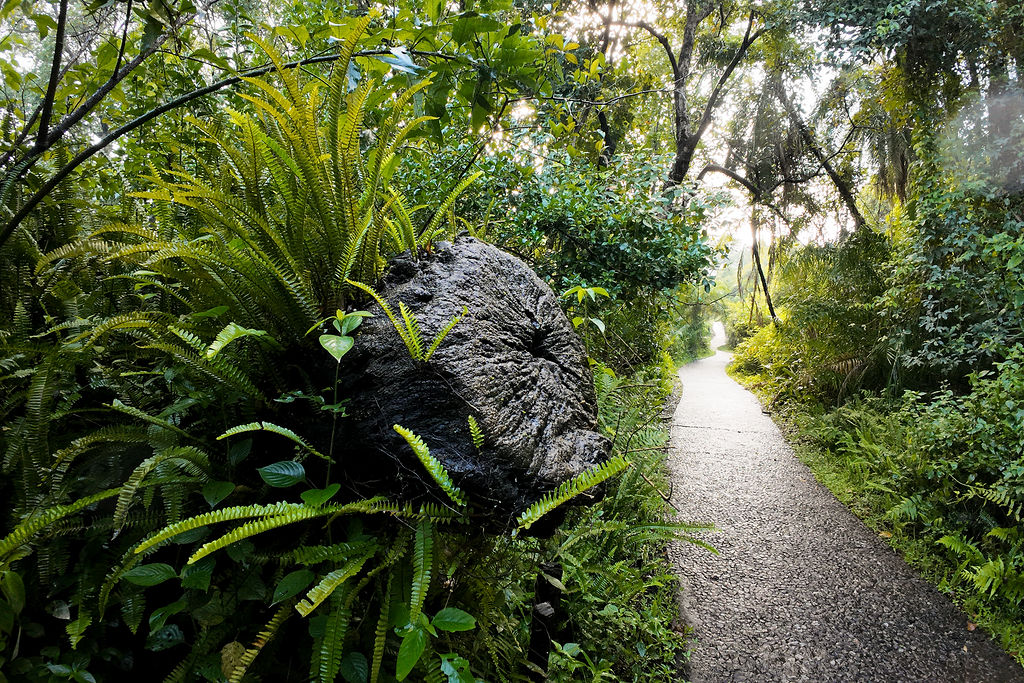
    As you approach Victoria Falls via the tarred walkway leading away from the park’s main gate, you’ll find yourself immersed in a lush environment teeming with plantlife.

    The rainforest, as it’s become known, lines the gorge of the falls; a unique microclimate characterised by high humidity and constant mist from the cascading waters. This environment nurtures a dense canopy of trees, including mahogany, ebony, and fig trees, which tower over a rich understory of ferns, creepers, and even the forest-dwelling orchid (calanthe sylvatica), a beautiful plant that flowers in December.

    Victoria Falls Slider Rainforest

    The Victoria Falls rainforest is renowned for its plant diversity, hosting over 70 shrub species and 170 floral species. (And that’s excluding the trees!) One notable resident is the vegetable ivory palm, or, as we prefer to call it, the ilala palm. This tree, after which our hotel is named, is known for its hard, ivory-like seeds that have been used for centuries in crafting jewellery and ornaments.

    (Read all about our special history with the ilala palm here.)

    A Haven For Wildlife

    Beyond its botanical wonders, Victoria Falls is a haven for wildlife enthusiasts. The Zambezi River, which feeds the falls, supports a thriving ecosystem that attracts a variety of animals throughout the year. One of the most iconic inhabitants is the African elephant.

    If you’ve visited Victoria Falls, you might even have seen ellies roaming the streets in town, though they do prefer to avoid human settlements where possible. Other mammals you could see in Victoria Falls National Park are warthogs, vervet monkeys, baboons, mongooses and, if you’re lucky, the elusive bushbuck!

    Our hotel’s gardens, which border the park, have also been known to attract zebras and warthogs, who delight guests as they dine on the veranda of the Cassia Restaurant.

    Bird-watchers will also be delighted by the many species of birds that call Victoria Falls home. From majestic African fish eagles and fork-tailed drongos to colourful malachite kingfishers darting above the water, the birdlife here is a testament to the area’s ecological richness.

    Eco-Tourism At Its Best

    For eco-conscious travellers, Victoria Falls offers a perfect blend of adventure and environmental education. Guided tours not only showcase the splendour of the falls, but also highlight the importance of conservation.

    victoria falls activities

    Walking tours through the rainforest provide an up-close look at the diverse plant life, while boat cruises on the Zambezi River offer opportunities to observe hippos, crocodiles, and the myriad of bird species in their natural habitat.

    Overall, a trip to Victoria Falls isn’t just about witnessing a geological wonder; it’s about immersing yourself in a world where nature reigns supreme and doing your part to ensure conservation triumphs with effort.

    Stay With Us

    Ilala Lodge Hotel is a 5-star establishment located in the heart of Victoria Falls town, right on the border of the national park and within walking distance of the falls.

    Stay with us and discover the beauty of the falls, as well as its surrounding fauna and flora – all of which live and thrive in the spray of the mighty Zambezi River. This is a beautiful place of adventure and awe – where the raw power of nature is evident for all to see and enjoy.

    Browse our accommodation options and secure your booking by contacting us at onlinereservations@ilalalodge.com. Alternatively, feel free to make use of our online booking platform to book your dates.

    Pack your bags, prepare your camera, and get ready to explore the enchanting flora and fauna of Victoria Falls!
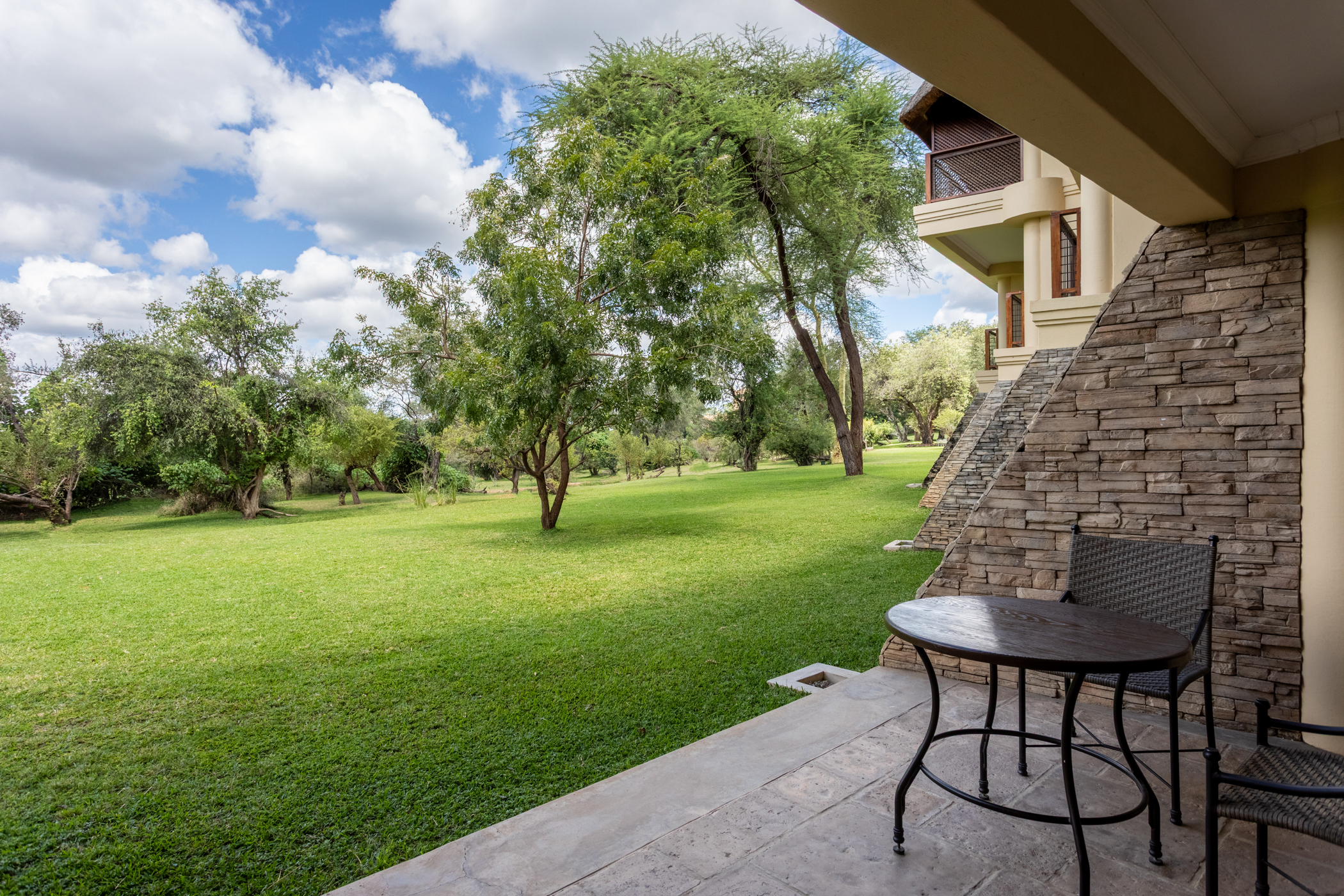
     

  • Five Reasons to Visit Victoria Falls

    Five Reasons to Visit Victoria Falls

    Here are five reasons to visit Victoria Falls by guest blogger, Roxanne Reid. Victoria Falls, on the boundary between Zimbabwe and Zambia, has long conjured an element of old-world Out of Africa romance. To visit the falls is a bucket-list expedition into the heart of Africa to see one of the world’s greatest natural wonders, and here are 5 great reasons to visit:

    1. UNESCO World Heritage Site

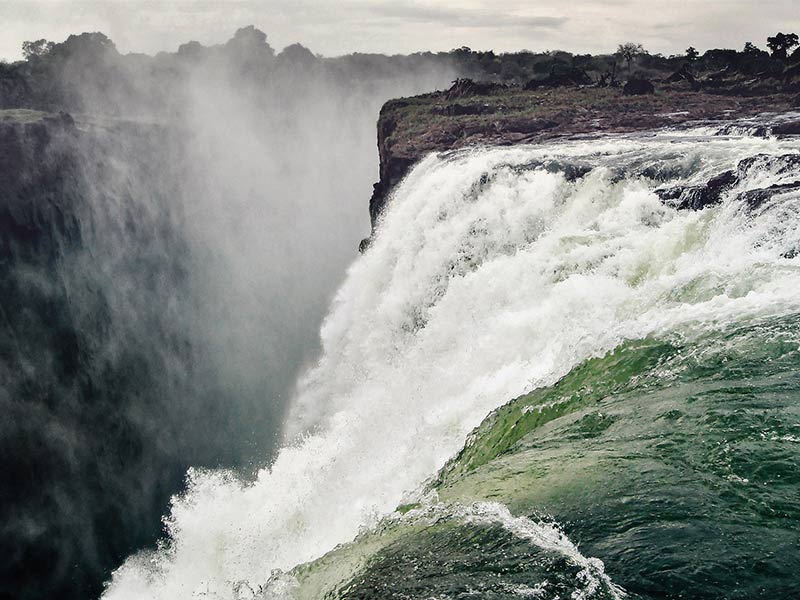
    Victoria Falls and the ‘rainforest’ that surrounds it are part of a UNESCO World Heritage Site. That means that they have been recognized to have outstanding universal value. One reason for this is that the main falls form the highest, widest sheet of continually falling water in the world – twice as high as Niagara Falls and around 500m/1,640ft wider. The volume of water is impressive too: it is said that the whole annual consumption of New York City goes over the falls in just three-and-a-half days during peak flood season in March and April. The force of the water as it thunders into the gorge drives spray into the air and covers everything in mist. For this reason, the locals call Victoria Falls ‘Mosi-oa-Tunya’, meaning the smoke that thunders. You can see this ‘smoke’ up to 50km/31mi away.

    If you visit during March to May, when there’s enough spray, you may see a lunar rainbow during the full moon. Just like a normal rainbow, the moonbow appears when water particles in the air refract light. Victoria Falls opens at full moon for three nights. For the best effect, try to be there in the first hour or so after the moon appears.

    2. Zambezi River

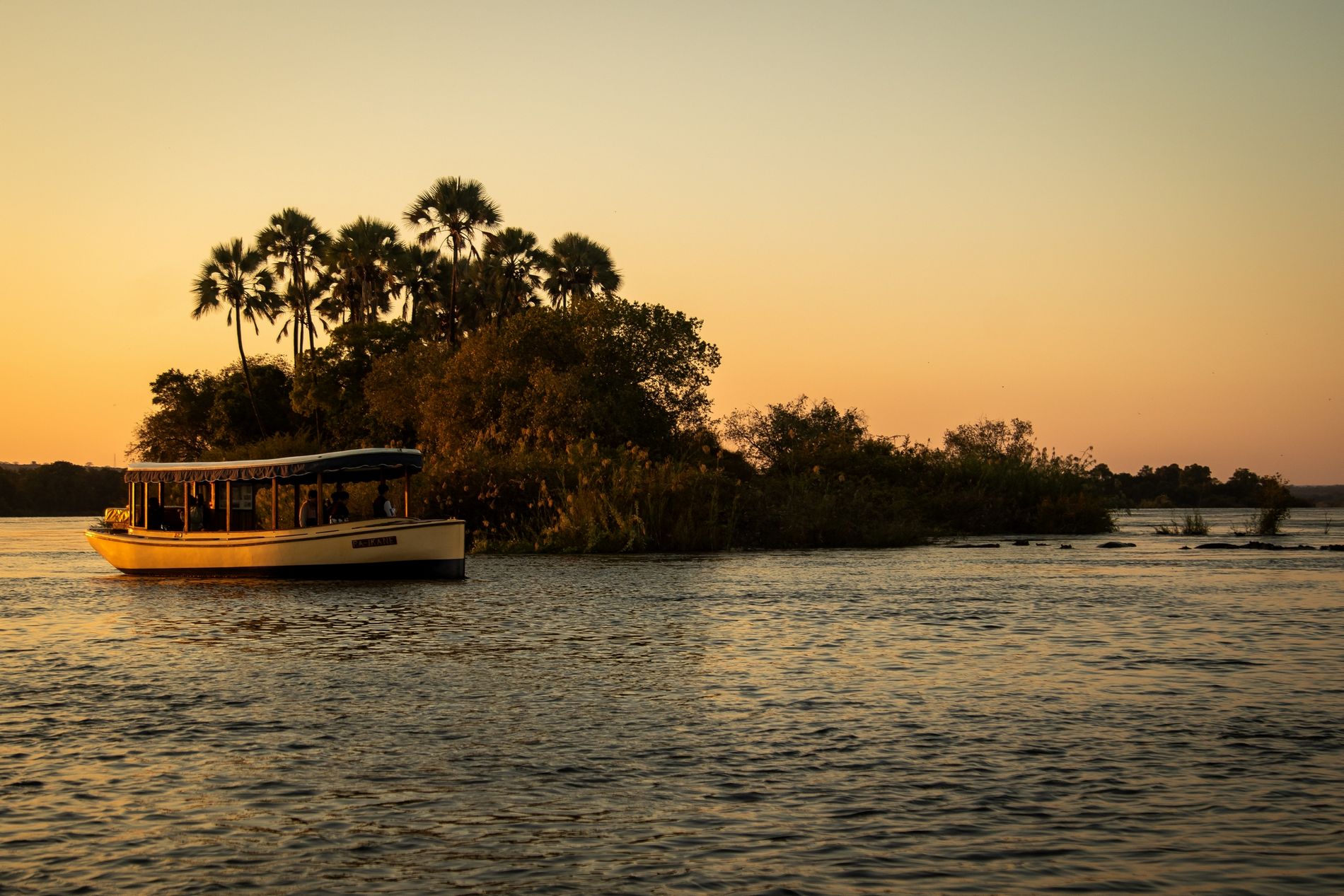
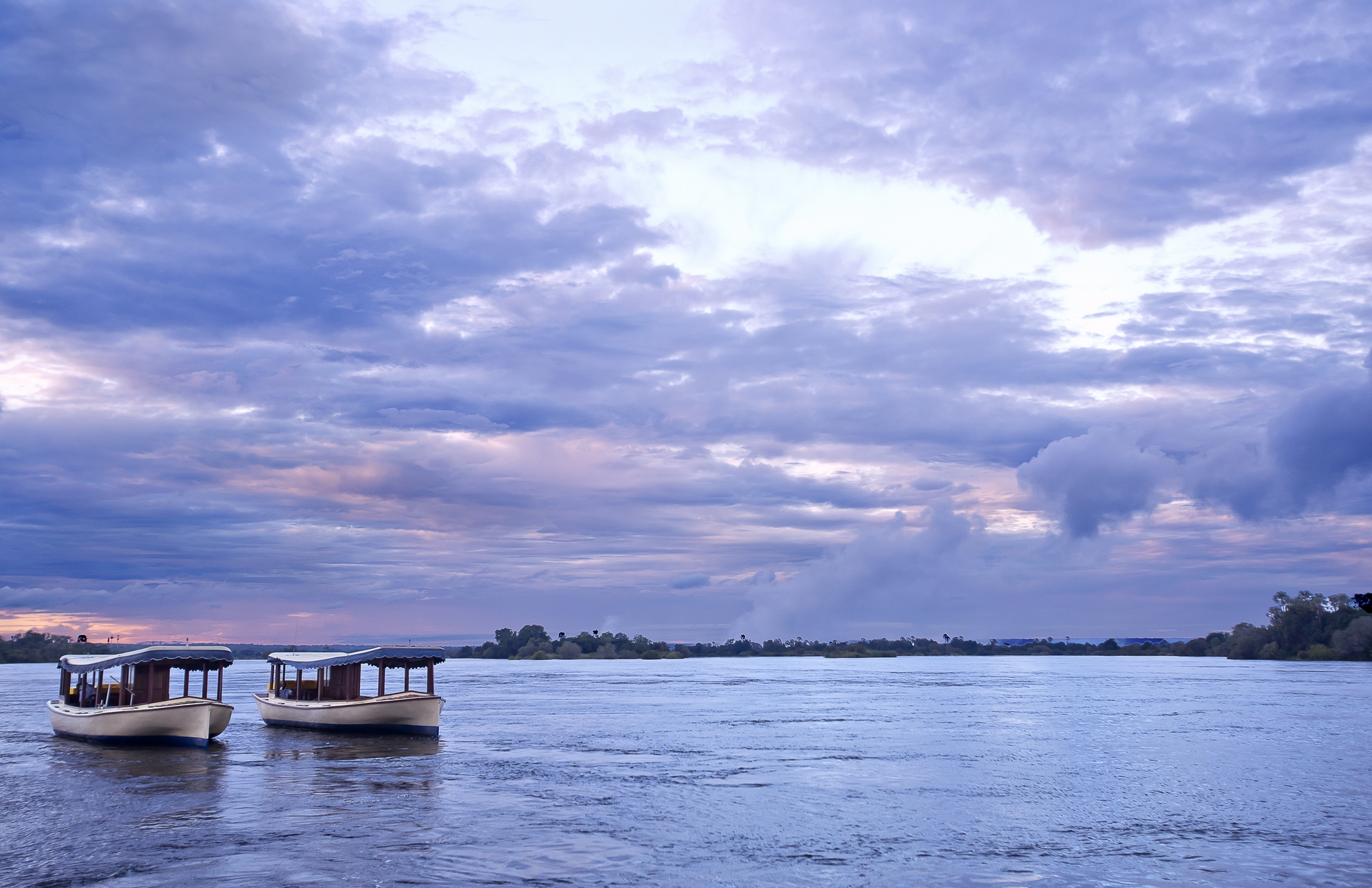
    The Zambezi is one of Africa’s major rivers. It forms the boundary between Zimbabwe on one side of Victoria Falls and Zambia on the other and is the lifeblood of the area. Blood-red sunrises and sunsets along the river are dazzling in their beauty. Don’t miss a Ra-Ikane sunset boat cruise on the river to see hippos, elephants, crocs and birds, as well as to toast the setting sun.

    3. Adrenaline Activities

    If spiking your adrenaline is something that turns you on, you’ll be spoilt for choice at Victoria Falls. Most famous of the many adrenaline activities is probably the 111m/364ft bungee jump from the bridge above the falls into the gorge. White-water rafting is also popular. If you want to do this, make sure you visit at the right time of year. White-water rafting is only available from around the end of August to December when water levels are lower and therefore safer.

    Another thrilling activity during the low-water months is to cross the old iron bridge to the Zambian side of the Falls for a swim in Devil’s Pool. You might call this the world’s most spectacular infinity pool. The experience will have you floating right to the very edge of the pool where the water plummets into the gorge below. A guide will come with you to keep you safe.

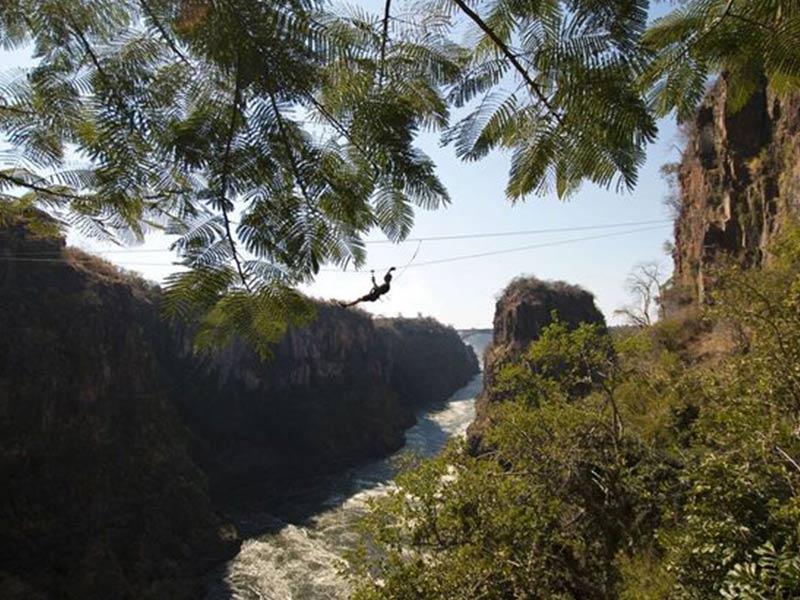
    With a gorge swing, flying fox and zipline over Batoka Gorge as well, it’s no wonder this is known as Zimbabwe’s adrenaline capital.

    The Canopy Tour - Victoria Falls Activities

    4. Wildlife

    Victoria Falls National Park and Zambezi National Park, both in Zimbabwe, and Mosi-oa-Tunya National Park in Zambia are all in easy reach of the falls. They provide a wealth of wildlife-watching opportunities, from elephant, buffalo, lion and leopard to a host of antelope species like sable, eland, kudu and impala.

    If you’re really keen on wildlife and safari experiences, ask about a day trip to Hwange National Park. Zimbabwe’s biggest national park, it’s only an hour’s drive away from the Falls. Chobe National Park in neighboring Botswana, is 80 minutes away, and is known for its huge elephant and buffalo herds. Each park delivers some of the best wildlife viewing in southern Africa.

    Terry Feuerborn - Vic Falls Wildlife

    5. A Different Perspective

    Once you’ve seen Victoria Falls from close up on the ground, take to the air in a helicopter or a microlight. You’ll get aerial views that will have you marveling at the sheer scale of the Falls. If you choose the heli-flip, the chopper will make a few passes over the falls so everyone gets to photograph them, no matter where you’re sitting. If you choose the microlight, hang onto your camera or phone. Even better, attach it to your body with a cable so you don’t lose it if you drop it.


  • 5 Things You Didn’t Know About the Victoria Falls Water Levels

    5 Things You Didn’t Know About the Victoria Falls Water Levels

    The Zambezi River flows through six countries to make its notable descent over the mighty Victoria Falls – one of the Seven Natural Wonders of the World and a World Heritage site.

    This impressive body of water is the fourth largest river in Africa, has a catchment covering 1,390,000 km², a length of approximately 2700km and flows from its source in north-western Zambia right through to the Indian Ocean.

    With those impressive dimensions, it no surprise that the water levels vary year-round and have knock-on effects on the area.

    Victoria Falls

    It must be said that at any time of the year Victoria Falls has so much to offer and is a year-round destination thanks to its mild winters, hot summers, and enviable location between Zambia and Zimbabwe. The Victoria Falls themselves, needless to say, are always an incredible sight, no matter the season or the reason. There is so much to learn and discover and here are some interesting facts about the Zambezi River and Victoria Falls water levels we bet you didn’t know.

    1. Some parts of The Victoria Falls dry up each year

    Water levels of the Zambezi rise and drop so dramatically throughout the year that at its lowest water level in October, November and early December, some sections of the Falls dry up and the spray is at its least, if any. Contrary to some speculation, the Falls will never dry up, so you are guaranteed to always witness this world wonder, no matter the time of year.

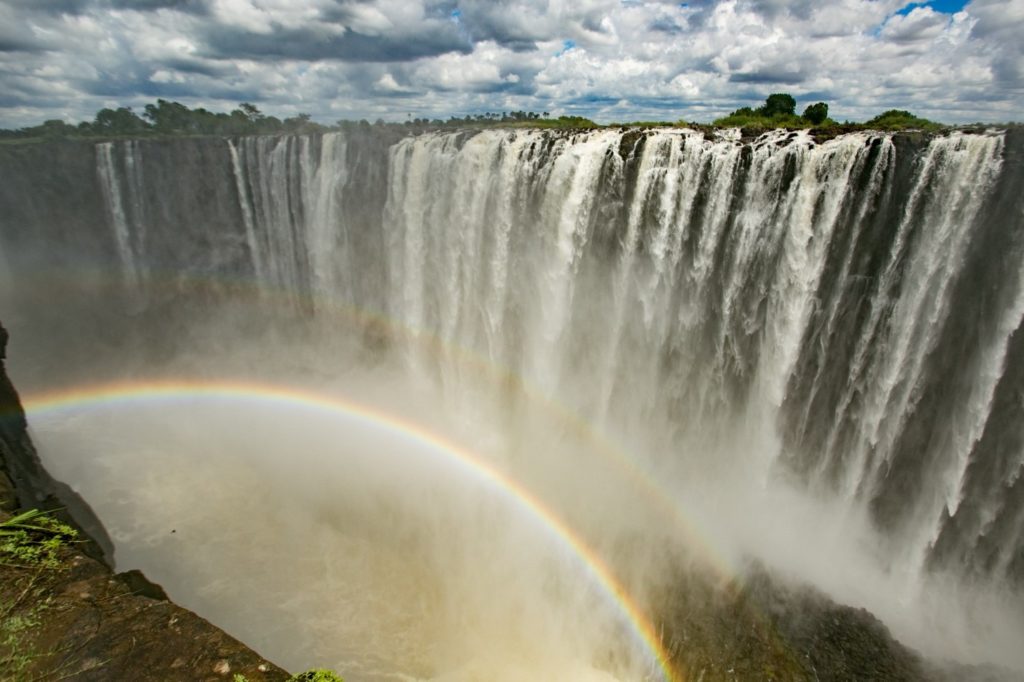
    Victoria Falls Rainbow
    Photo credit: Lesanne Fowler Photography

    The lowest recorded water flows recorded until today were during the 1995/96 season which clocked an annual mean flow of 390 cubic metres per second. In contrast, the Victoria Falls are currently flowing at 4,700 cubic meters per second!
    2. Depending on the water levels, you can swim on the edge of the Falls

    From the months of September to December, when the Zambezi River is at a safe level, adrenalin daredevils can swim in a naturally formed pool at the edge of the Falls, appropriately named the “Devil’s Swimming Pool”. This pool is accessed from Livingstone Island – the island that David Livingston first saw the Falls from, hundreds of years ago.

    From February to August when the water levels are beginning to rise, and the current is too strong, the Devil’s Pool closes as it would be dangerous to attempt to swim. However, the more invitingly named “Angels Pool” opens which offers a similar exhilarating experience. You can read more about an Angels Pool experience here – https://goo.gl/8P4ejN

    Devil's Pool
    Photo credit: Kimmie Conner – Travel & Festival Blog

    3. The highest recorded flow was in 1958

    If we think this year the water levels have been high, where our peak reached 4,700 cubic meters of water per second, try to imagine the levels nearly three times higher and more powerful. Truly incredible, right? The highest recorded water level in Victoria Falls was back in 1958 where it reached more than 11,600 cubic meters of water per second!

    At Ilala Lodge Hotel, we can currently feel the power of the thunderous falls with their constant vibrations at the hotel, and the doors shake and rattle throughout the day. At the   Ra-Ikane jetty site, we record and track of the water levels each year and it is amazing to see the change that can happen overnight.

    Victoria Falls Water Levels
    Photo credit: Lesanne Fowler Photography

    In recent times, the highest water levels were recorded in Victoria Falls in 2006 where even the local Boat Club was flooded and forced to close. The second highest levels were recorded in 2009 where the water in the gorge rose over 12 meters above its normal recorded level that year.

    4. Animals do go over the Falls

    Did you know that the power of the Zambezi River is strong enough to wash away even the largest land mammal in the world? In April 2013, during the high-water level, it was reported that four elephants who were swimming across the river channel, were sadly swept away by the ferocious currents and over the Falls.

    Zambezi River
    Photo credit: Lesanne Fowler Photography

    4. The Zambezi River and Falls are enshrined in local Folklore

    Being such a prominent part of the lives of those who inhabit the area, the Zambezi River has a great deal of magic and mystery attached to it. The local inhabitants believe the Zambezi River has a “River-God “spirit, the famous Nyami-Nyami, who watches over the river. In the rainy season when the plain is in full flood, a ceremony known as the Ku-omboka Ceremony, takes place where the local people move onto higher ground to escape the Zambezi flood waters.

    Lake Kariba
    Photo credit: Facts Online

    5. The best time to view Victoria Falls

    Peak Water: March to May
    Come the end of the rainy season in Southern Africa, the sheer volume of water cascading over the Falls is at its peak. This results in the spray from the Falls being so thick and dense that it literally “rains” down on you so be prepared to get drenched! This is an excellent time to view the Falls from above on a helicopter flight.

    Victoria Falls
    Photo credit: Lesanne Fowler Photography

    Medium to High Water: January to February & June to August
    This happy medium is one of the best time of year to view Victoria Falls. With an enjoyable amount of spray falling down on you and cooling you off, you can also view the falls in their enormity and peer down cliff faces, down into the gorge below.

    Victoria Falls Zimbabwe

    Low Water: September to December
    The low water season is a fantastic time to photograph Victoria Falls with the cliff face exposed and this spectacular geographical formation is in plain sight. The spray is less, the skies are sunny and blue and there are less visitors to the area too. If you are feeling daring, why not take a hike down the Gorge and view the Falls from a different perspective?

    Current Water Levels:Zambezi River Daily Flow

    The Zambezi River flow has been increasing steadily as is expected, and at the end of this week, it was at 4,604 cubic meters per second in comparison to 2,647m cubic meters per second on the same day last year. The river water levels will begin to drop from June until December.

    Each season and water level offer tourists a new and exciting opportunity to view the majestic Victoria Falls and a variety of activities for any taste, interest or adventure-seeking level.

    We would love to hear which season your favourite is and why?

    Sources:
    http://www.zaraho.org.zm/hydrology/river-flows
    https://www.victoriafalls-guide.net/victoria-falls-weather.html
    https://www.victoriafalls-guide.net/zambezi-water-levels-closures.html
    https://www.victoriafalls-guide.net/victoria-falls-weather.html
    http://www.zaraho.org.zm/hydrology/river-flows

  • How the Victoria Falls community works together to protect our wildlife

    How the Victoria Falls community works together to protect our wildlife

    Zimbabwe is world-renowned for its beautiful landscapes and abundance of wildlife. With a total of 10 National Parks which have some of the best game viewing in Africa, two iconic rivers and of course the world’s most famous waterfall, Victoria Falls, there is a lot on offer for visitors. What Zimbabwe is also well-known for is its caring people who have a very strong community spirit. The evidence of this can be seen in how the Victoria Falls community works together to protect their wildlife and support anti-poaching efforts in the area.

    Victoria Falls Anti-Poaching Unit

    Sadly, poaching in Zimbabwe is on the increase and privately funded anti-poaching projects work hand in hand with local national park wildlife offices which are entirely reliant on revenue brought in by tourists. The Victoria Falls Anti-Poaching Unit (VFAPU) is one of these non-profit organizations in Zimbabwe that is dedicated to the conservation of wildlife and natural resources in Victoria Falls.

    Victoria Falls Anti-Poaching Unit

    Victoria Falls Safari lodge in conjunction with Charles Brightman, a conservationist and professional guide set up the VFAPU in January 1999 to fight and protect against poaching in the area. Working closely with the Zimbabwe Parks and Wildlife Management Authority and the Zimbabwe Republic Police, VFAPU has removed over 22 000 wire snares and rescued approximately 200 injured animals.

    VFAPU

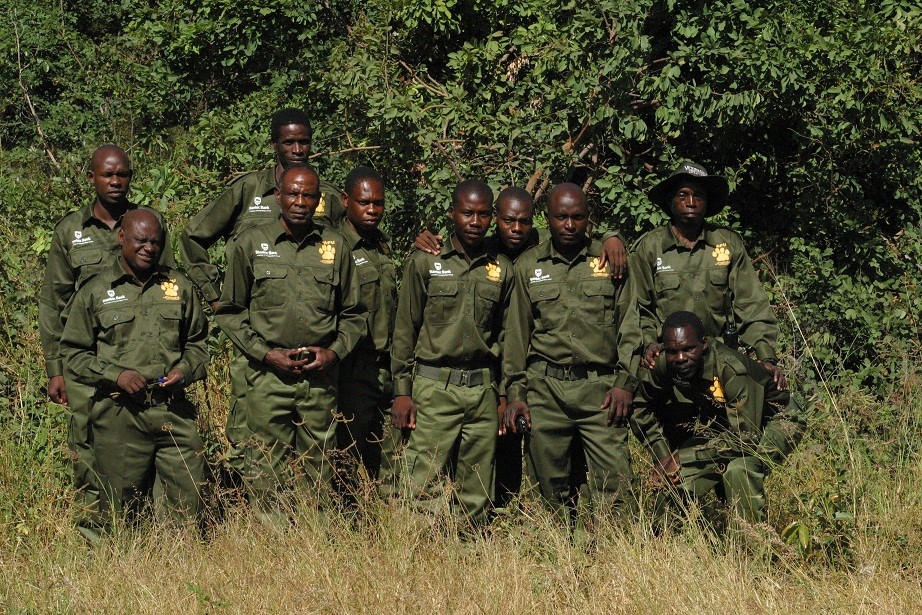
    VFAPU began with only three scouts which have since grown to a team of 17, who actively patrol an area of approximately fifty square kilometres surrounding Victoria Falls. Operating seven days a week, both day and night, VFAPU works tirelessly to combat poaching by patrolling the area, looking for signs of poaching and other illegal activity.

    Victoria Falls Anti-Poaching Unit

    As a family-run hotel, Ilala Lodge holds strong values. We support our community and have committed to protecting the environment. In addition, we regularly take part in fundraising projects to support the rangers each month.

    Poaching Victoria Falls

    Most recently, the community came together to host two successful fundraising events to raise awareness and revenue for anti-poaching in Victoria Falls.

    Victoria Falls Anti-Poaching Unit Pop-Up Dinner

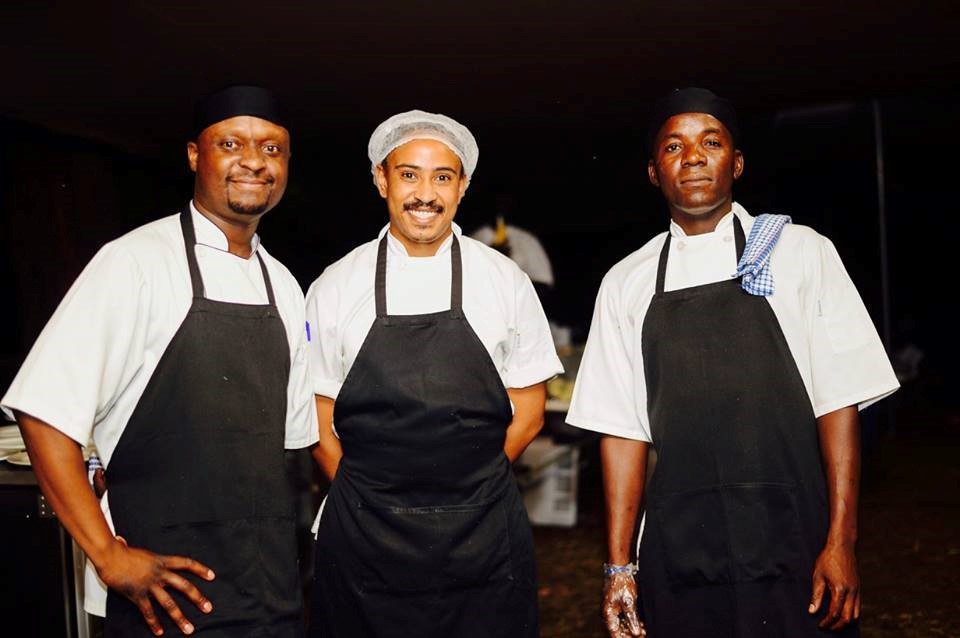
    A pop-up dinner was hosted in Victoria Falls on the 7th October where guests were transferred to a secret bush location for welcome cocktails. The patrons were then further surprised when they were taken to a second location for a ‘battle of the chefs’ over a 5-course dinner with carefully selected wines. Ilala Lodge sponsored the event and the first course for 120 diners. All funds and donations raised on the night went to VFAPU. Over $12,000.

    Victoria Falls Poaching

    Victoria Falls Conservation

    Conservation Victoria Falls

    On another occasion at an annual golf tournament held in Harare on the 22nd September, hosted by the hospitality group Africa Albida Tourism, Ilala Lodge Hotel sponsored two vouchers for two nights for two people sharing. These vouchers were put into a raffle. Together with the proceeds from the golf day and the raffle, we raised an incredible $24,972 for VFAPU.

    Poaching Victoria Falls


    VFAPU

    How can you help?
    • Add Victoria Falls, Zimbabwe to your safari itinerary
    • Support VFAPU by spreading the word on social media
    • Support VFAPU through ‘Pack for a Purpose’
    • Adopt a VFAPU Scout and sponsor their salary for a year for US$307

  • The Victoria Falls Anti-Poaching Unit

    With the removal of several snares found in front of Ilala Lodge Hotel during the past week, we thought it was high time to make mention of the incredible work done by the Victoria Falls Anti-Poaching Unit (VFAPU) – a non-profit organisation dedicated to the conservation of local wildlife and natural resources. (more…)

  • 10 Things You Didn’t Know About The Zambezi River

    10 Things You Didn’t Know About The Zambezi River

    One of the most fascinating rivers in Africa, the Zambezi is not only a major tourist attraction, but a lifeline and constant source of income for millions. (more…)

  • The Best Time to Visit Victoria Falls

    The Best Time to Visit Victoria Falls

    One of the most important things to consider when planning a trip to Zimbabwe’s tourism capital is the best time of year to do so. (more…)

  • Hwange National Park Day Trips from Victoria Falls

    Hwange National Park Day Trips from Victoria Falls

    Feeling the need to venture outside of the tourist hub that is Victoria Falls? We’ve got the solution for you. Unlike most tour operators, Ilala Lodge Hotel offers an enticing day trip from Victoria Falls to the Hwange National Park. (more…)

  • The God of the Zambezi River

    Folklore is an integral part of African culture, having been passed down through many generations.  Even today, most Africans retain a sense of superstition and awareness of their original traditions and customs.

    Similar to the well-known Aesop’s Tales and other fables of our youth, stories and folklore often have a moral or survival element to the tale with animals as the main characters. One of the most well-known creatures of the Zimbabwean mythological landscape is Nyami Nyami, the God of the Zambezi River.

    This serpent-like creature is said to reside under a rock in Lake Kariba and is thought to be about three metres long, although it is taboo to speculate about this. Wooden representations of this deity are usually to be found on sale close to the hotels in Victoria Falls, at the Falls themselves, and all along the roadside nearby.

    Tribesmen who have ventured close to the resting place of the River God have found themselves sucked down into the surrounding whirlpools, never to be seen again. This site is known as Kariwa, ‘the trap’, and lends its name to Kariba Dam. The locals believed that the building of Kariba Dam would anger Nyami Nyami, but the contractors put this down to superstition and work pressed on regardless, although it was fraught with difficulty.

    Tentative survey work on the dam began in the late 1940’s but a few months in, a cyclone from the Indian Ocean swept over this landlocked country, with 15 inches of rain falling in a few hours, killing all of the surveyors in a landslide.  The river rose seven metres overnight, sweeping animals and villagers away in its wake, and totally disrupting the peaceful valley.

    In 1955, work began again in earnest, only to be halted by an unexpected flood which washed away the foundations of the coffer dam and bridge.
    Again in November 1956, heavy rains caused another flash flood, which swept away machinery and men in its path, seriously hampering work on the dam.
    In 1958 yet another flood raced down the river, with 16 million litres of water surging over the suspension bridge every second, destroying the north tower and buckling the bridge.

    Eventually Nyami Nyami’s perceived efforts to stop construction ceased and the dam was completed at the cost of 80 lives. Up until today, earth tremors are occasionally felt in and around Kariba which the locals see as an indication of Nyami Nyami’s ongoing wrath.